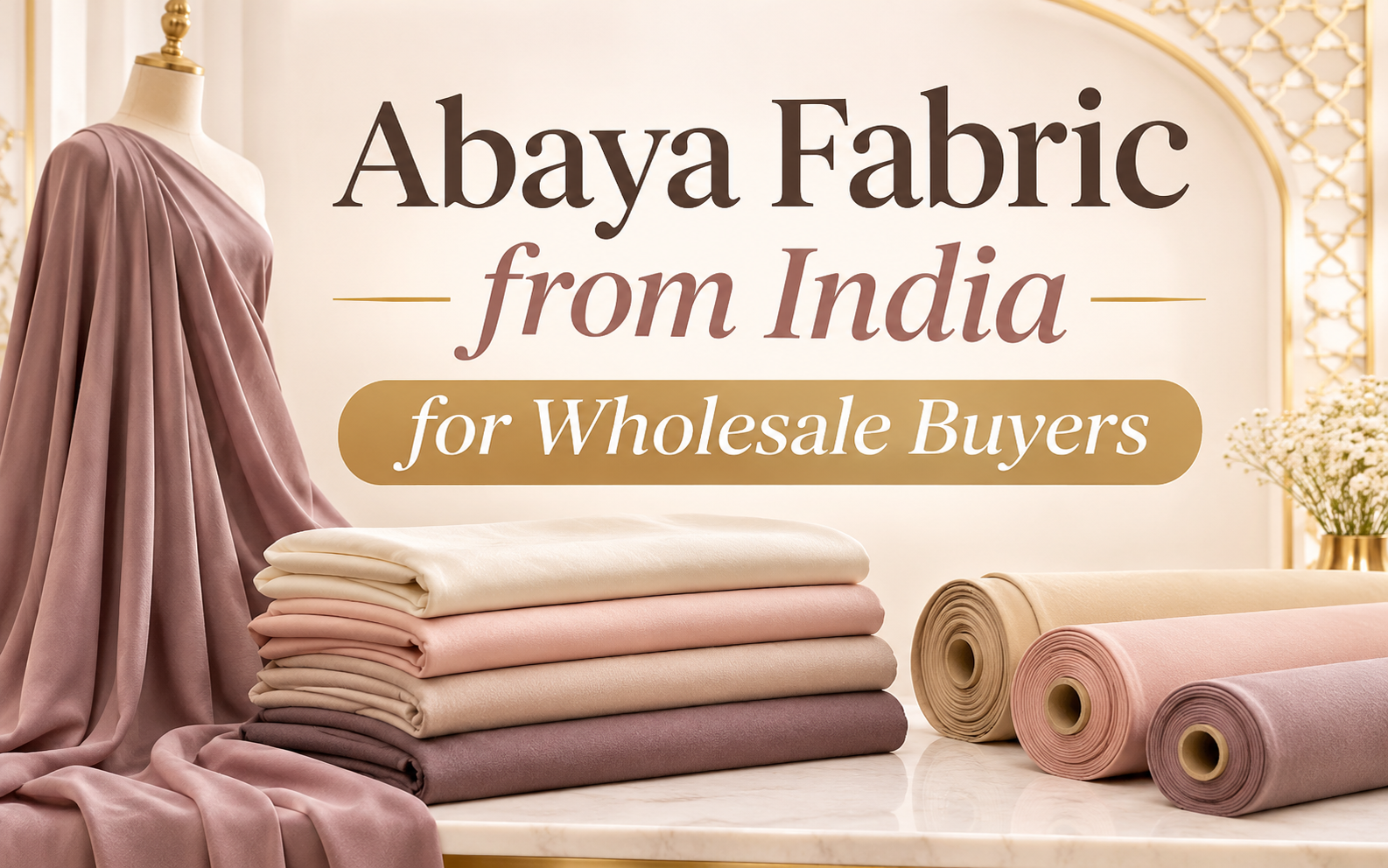
Abaya fabric from India is an important sourcing option for garment manufacturers, modest fashion brands and textile wholesalers serving the Middle East. Businesses in Saudi Arabia, the UAE, Kuwait, Qatar, Oman and Bahrain look for fabrics that offer the right balance of comfort, opacity, drape and appearance for their abaya collections.
Choosing the right material matters because two black fabrics can look almost identical in photographs but perform differently after stitching. One may fall beautifully, while another may feel stiff, cling to the body or lose its colour after washing.
For international buyers sourcing wholesale fabrics, Surat, Gujarat, is an established textile manufacturing centre in India. Ajmera Fabric, a division of Ajmera Fashion Limited, offers polyester, viscose, blended and embroidered fabric collections through its Surat-based textile operations. Buyers can explore these materials for suitable modest fashion applications and discuss their specific requirements with the sourcing team.
Why Do Wholesale Buyers Source Abaya Fabric from India?
India has a developed textile manufacturing industry with weaving, dyeing, printing, embroidery and fabric finishing capabilities. This gives garment businesses opportunities to explore different materials for clothing production.
Surat is particularly relevant for polyester-based fabrics, synthetic blends and decorative textiles.
For abaya manufacturers, the advantage is access to different fabric constructions and finishing options. A company producing everyday black abayas may require a smooth, opaque material, while a fashion label developing occasion wear may prefer embroidery or a satin-style finish.
However, buyers should confirm the actual fabric quality before purchasing. Not every Indian textile supplier offers specialist abaya materials, and a general polyester fabric should not automatically be considered suitable for an abaya.
Which Fabrics Are Best for Abaya Manufacturing?
The best fabric depends on the garment design, customer expectations and intended use. Everyday abayas, open abayas and festive collections often need different textile properties.
Nida Fabric for Everyday Abayas
Nida is a familiar fabric name in the abaya market. It is commonly associated with soft, smooth, matte polyester-based materials that offer a flowing appearance.
Suitable Nida qualities can work well for everyday black abayas and other modest clothing. However, Nida is a trade name, not a single standardised fabric specification.
Buyers should compare actual GSM, fibre composition, opacity, surface finish and drape before selecting a quality for garment manufacturing.
Crepe Fabric for Abayas and Modest Wear
Crepe fabrics have a distinctive textured surface. Depending on their composition and construction, they can provide a soft or more structured drape.
Polyester crepe is often considered for everyday abayas, open abayas and modest dresses.
Before purchasing crepe fabric wholesale, manufacturers should check whether the material provides the required coverage and comfort. Some lightweight qualities may need a lining.
Zoom Fabric for Abaya Collections
Zoom is another commercial fabric name used in modest fashion manufacturing.
Different Zoom fabric qualities may offer smooth surfaces, flowing drapes and varying levels of flexibility. The exact material characteristics depend on the supplier.
Garment manufacturers should evaluate softness, recovery, fabric weight and washing performance before choosing Zoom for an abaya collection.
Polyester Fabrics for Modest Clothing
Polyester is widely used in garment manufacturing because it can be produced in different constructions, weights and finishes.
Selected woven polyester materials may be suitable for abayas when they provide the required opacity, comfort and drape.
Ajmera Fabric offers a wholesale polyester fabric collection featuring different printed qualities for apparel production.
Manufacturers seeking plain black polyester abaya fabric should confirm the availability of an appropriate quality separately, as printed dress fabrics are not necessarily suitable substitutes.
Viscose Fabrics for Flowing Garments
Viscose is known for its soft feel and flowing drape. Suitable viscose qualities can be considered for kaftans, modest dresses, tunics and selected loose-fitting garments.
Buyers can explore Ajmera Fabric's wholesale viscose collection for available printed materials.
For abaya production, opacity, shrinkage and care requirements should be evaluated before choosing a viscose fabric.
Embroidered and Satin-Finish Fabrics
Premium abayas and festive modest wear collections may feature embroidered sleeves, decorative panels or smooth satin-style materials.
For these designs, garment manufacturers can explore embroidered maslin fabrics and suitable decorative textile collections.
The base fabric, embroidery placement, weight and finished garment design should be checked before approving a material.
Black Abaya Fabric Wholesale: What Makes a Good Quality?
Black abaya fabric is an important category for many modest fashion businesses. However, good quality depends on more than achieving a dark shade.
Colour consistency is essential when producing repeat collections. Even a small variation between fabric lots can affect the finished appearance of garments displayed together.
Opacity should also be checked carefully. A fabric that looks thick when folded may become transparent when worn as a single layer.
Drape is another important factor. The material should fall naturally without excessive stiffness or unwanted clinging.
For regular-wear abayas, buyers should also consider colour fastness, shrinkage, pilling and fabric comfort.
Testing a full-length garment sample is often the most practical way to understand whether a fabric meets the intended quality standard.
Abaya Fabric from India for Saudi Arabia Buyers
Garment manufacturers and textile importers in Riyadh, Jeddah, Dammam and Al Khobar may source fabrics for traditional abayas, open abayas and contemporary modest fashion collections.
For everyday garments, suitable opacity, comfortable movement and easy-care performance are important considerations.
Occasion wear collections may require a different fabric finish, decorative embroidery or a more structured appearance.
Before importing fabric from India, Saudi buyers should confirm the technical specifications, shipping arrangements and applicable textile compliance requirements for their products.
Wholesale Abaya Fabric Supply for Dubai and UAE
Dubai is an important trading centre for textile wholesalers, garment businesses and modest fashion brands.
Fabric importers in Dubai, Abu Dhabi and Sharjah may source materials for everyday abayas, premium collections, kaftans, jalabiyas and other modest garments.
A clothing brand may prioritise surface finish and drape, while a garment manufacturer may focus on cutting performance, fabric width and shade consistency.
For UAE buyers, selecting the right material begins with identifying the finished garment's requirements and reviewing actual samples.
Businesses importing through Dubai should also clarify their commercial shipping terms and the documents required for customs clearance.
Wholesale Abaya Fabric for Kuwait, Qatar, Oman and Bahrain
Modest fashion businesses in Kuwait, Qatar, Oman and Bahrain may have different requirements for fabric texture, garment weight and finishing.
Some collections focus on traditional black abayas, while others use different colours, open-front designs or decorative details.
Rather than choosing one fabric for every market, manufacturers should evaluate materials according to their customer preferences and intended garment styles.
For international textile sourcing, a clear fabric specification helps the supplier understand the required quality.
How to Check Abaya Fabric Quality Before Importing
Before purchasing abaya fabric from India, buyers should confirm the material's fibre composition, GSM and usable width.
These specifications influence garment weight, texture and cutting efficiency.
Next, evaluate the fabric's drape and opacity. For black abayas, check shade consistency under natural and indoor lighting.
Depending on the material, testing may include shrinkage, colour fastness, seam performance and resistance to surface pilling.
Physical samples provide a better understanding of softness, thickness and movement than catalogue photographs alone.
International buyers should approve the fabric based on their actual garment requirements rather than relying only on the supplier's product description.
Ajmera Fabric – Wholesale Fabric Sourcing from Surat, India
Ajmera Fabric operates from Surat, Gujarat, and supplies wholesale fabrics through its manufacturing and textile sourcing network.
The company's business operations include weaving, dyeing, printing, embroidery and finishing.
Its online catalogue features polyester, viscose and decorative textile materials for different garment applications.
Ajmera Fabric also describes export documentation assistance, inspection support and shipping coordination for international buyers.
Businesses looking for specific Nida, Zoom or plain abaya-grade fabrics should contact the sourcing team to confirm material availability and suitability.
Can International Buyers Request Custom Abaya Fabrics?
Custom fabric development can be useful for modest fashion brands creating their own garment collections.
Some buyers may require a particular shade of black, a special fabric finish, a selected weight or a unique print.
Ajmera Fabric describes custom colour, print and selected weave development capabilities through its textile operations.
Specific customisation requests should be reviewed according to the fabric construction and manufacturing feasibility.
Providing an approved sample or detailed technical specification can help the supplier understand the required material.
How to Source Wholesale Abaya Fabric from India
Begin by identifying the type of abaya your business produces. Everyday black abayas, open abayas and decorative occasion wear may require different materials.
Next, prepare your preferred fabric specifications, including composition, weight, width, colour, drape and finish.
Explore the Ajmera Fabric wholesale catalogue to compare available textile collections.
If your preferred abaya material is not listed, share the required specifications with the sourcing team and request confirmation of sourcing options.
Before purchasing, clarify fabric samples, quality requirements, packing, commercial pricing and international shipping arrangements.
Buyers can submit their sourcing requirements through the Ajmera Fabric wholesale quotation page.
Choosing Abaya Fabric from India for Your Wholesale Business
The right fabric can make a significant difference to the comfort, appearance and quality of an abaya.
For garment manufacturers, selecting materials based on opacity, drape, colour consistency and performance is more useful than choosing fabric by name alone.
India offers textile manufacturing and sourcing capabilities for different polyester, blended and decorative materials. Surat is an established location for buyers exploring these options.
Ajmera Fabric provides wholesale fabric collections and international sourcing assistance from Surat. Buyers requiring particular abaya-grade materials can discuss their technical requirements directly with the company.
If your business is looking for abaya fabric from India, explore the available materials at Ajmera Fabric or contact its sourcing team for wholesale fabric enquiries.
Frequently Asked Questions
1. Where can I buy abaya fabric from India wholesale?
International buyers can explore specialist abaya textile suppliers and fabric manufacturers in Indian textile centres such as Surat. Ajmera Fabric offers wholesale textile collections and a sourcing enquiry service for business buyers.
2. Which fabric is best for making abayas?
Nida, crepe, Zoom and suitable polyester blends are commonly considered for abayas. The best fabric depends on opacity, drape, comfort, weight and the intended garment design.
3. Can Saudi Arabia and UAE businesses source abaya fabric from India?
Yes. Garment manufacturers and textile importers in Saudi Arabia and the UAE can source fabrics from Indian suppliers, subject to product availability, agreed specifications and import requirements.
4. What should I check when buying black abaya fabric wholesale?
Check fabric composition, GSM, width, opacity, shade consistency, colour fastness, softness and drape. Physical samples are useful before approving materials for garment production.
5. Does Ajmera Fabric supply fabrics suitable for abayas?
Ajmera Fabric offers polyester, viscose and decorative wholesale fabrics that buyers can evaluate for selected modest fashion applications. Specific abaya-grade material availability should be confirmed with its sourcing team.
6. Can international buyers request custom abaya fabrics?
Custom colours, prints and selected fabric developments may be possible depending on the supplier's capabilities. Buyers should provide technical specifications or an approved sample for evaluation.
7. How can I request wholesale fabric pricing from India?
Visit Ajmera Fabric's wholesale quotation page and share your required fabric specifications, purchasing details and destination country.